

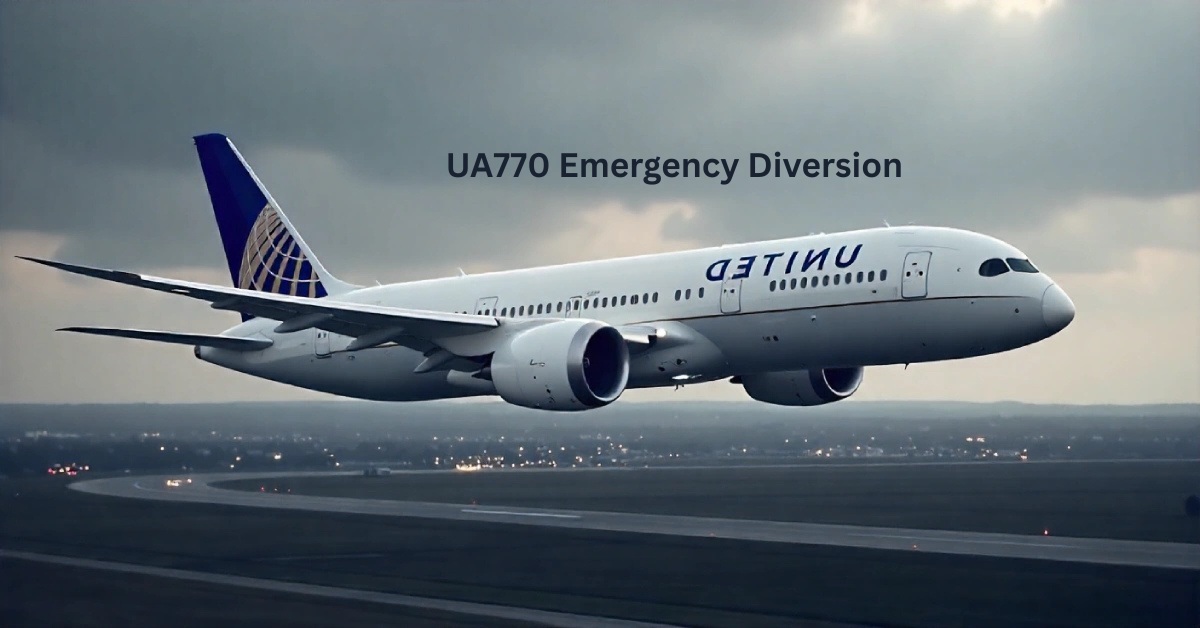
A mid-air incident can turn a routine flight into a global news story in minutes. This was precisely the case with the UA770 Emergency Diversion. What began as a standard transatlantic journey from Barcelona to Chicago quickly evolved into a textbook example of modern aviation safety protocols in action. When the crew of the Boeing 787 Dreamliner declared an emergency, it triggered a series of well-coordinated procedures that ensured the safety of everyone on board.
This article provides a thorough analysis of the UA770 Emergency Diversion. We will explore the sequence of events, the technical factors that led to the crew’s decision, and the professional response from both the flight and ground teams. By examining this incident, we can gain a deeper understanding of the incredible systems and training that make air travel one of the world’s safest modes of transportation. This is not just a story about a flight that changed course; it’s a look into the heart of aviation safety.
The Unfolding of the UA770 Emergency Diversion
For the passengers and crew aboard United Airlines flight UA770, the day started like any other long-haul trip. The Boeing 787-9, with registration N26902, departed from Barcelona El Prat Airport (BCN) on schedule, destined for Chicago O’Hare (ORD). The initial climb and cruise phase proceeded without any issues. However, several hours into the flight over European airspace, the situation in the cockpit changed dramatically.
The Critical Moments in the Cockpit
The first sign of trouble came from the aircraft’s sophisticated monitoring systems. Pilots received an alert related to a potential irregularity in the cabin pressurization system. While not an immediate failure, any anomaly with this critical system requires immediate attention.
The flight crew swiftly moved through their standard operating procedures:
- Alert Verification: The pilots cross-referenced the alert with other system readings to assess the situation’s severity.
- Checklist Procedures: They initiated the corresponding electronic checklist to diagnose and manage the potential issue.
- Communication: The crew communicated with United’s operations control center to review the situation and determine the best course of action.
Given the nature of the alert and the long transatlantic journey ahead, the decision was made out of an abundance of caution. The captain decided that the safest course was to divert. This proactive choice is a cornerstone of airline safety culture, prioritizing well-being over schedules. The UA770 Emergency Diversion was now officially underway.
Declaring an Emergency: The Role of Squawk 7700
To execute the diversion with maximum safety and efficiency, the pilots “squawked 7700.” This is a universal transponder code that signals a general emergency to air traffic control (ATC).
What Squawking 7700 Accomplishes
- Immediate Priority: It alerts every air traffic controller in the vicinity that the aircraft requires immediate attention and priority handling.
- Clear Airspace: ATC works to clear the flight path, giving the aircraft a direct route to the chosen diversion airport.
- Ground Support Mobilization: The destination airport is notified, allowing them to activate emergency response teams, including fire, medical, and airport operations personnel, who standby for the aircraft’s arrival.
The choice of London Heathrow (LHR) as the diversion airport was strategic. As a major international hub and a United Airlines base, Heathrow offered the necessary infrastructure, including a long runway, advanced maintenance facilities, and customer support staff to handle the aircraft and its passengers. The UA770 Emergency Diversion was managed with precision from the sky to the ground.
Technical Insight: Why Precautionary Diversions Happen
Modern aircraft are equipped with thousands of sensors that monitor every aspect of the flight, from engine performance to cabin environment. The pressurization system, in particular, is a marvel of engineering, ensuring a safe and breathable atmosphere at cruising altitudes that can exceed 40,000 feet. The UA770 Emergency Diversion was triggered by an alert from this very system.
Understanding Cabin Pressurization
At high altitudes, the outside air is too thin to sustain human consciousness. A pressurization system pumps conditioned air into the cabin, maintaining an internal altitude equivalent to about 6,000 to 8,000 feet. This system is managed by outflow valves that regulate the release of air.
A sensor alert related to this system could indicate several potential issues:
- A malfunctioning valve.
- An incorrect reading from a sensor.
- A potential leak in the fuselage.
- An irregularity in the air conditioning packs that supply the air.
Even if backup systems are functioning perfectly, pilots are trained to take no chances. The decision to initiate the UA770 Emergency Diversion reflects a core principle of aviation: never press on with an uncertainty. It’s far safer to land and have technicians inspect the issue on the ground than to risk a potential escalation over an ocean. This incident was a clear example of a “better safe than sorry” approach.
The Role of Safety Protocols in the UA770 Emergency Diversion
Aviation safety is built on layers of redundancy and strict, standardized protocols. When the alert appeared, the crew’s actions were not improvised. They were following a well-rehearsed script developed over decades of operational experience and training.
This protocol-driven response ensures that no matter who is in the cockpit, the reaction to a specific event is consistent and predictable. The successful outcome of the UA770 Emergency Diversion is a testament to the rigorous training United Airlines pilots undergo, which includes countless hours in simulators practicing these exact scenarios. This training removes guesswork and ensures decisions are made calmly and logically, even under pressure.
The Human Element: Crew and Passenger Experience
While pilots managed the technical aspects, the cabin crew faced the challenge of managing passenger emotions. An unexpected descent and a change in direction can cause anxiety. The professionalism of the flight attendants during the UA770 Emergency Diversion was crucial in maintaining a calm and orderly cabin.
Calm and Clear Communication
According to passenger accounts, the captain made a clear, reassuring announcement explaining the situation. The phrase “out of an abundance of caution” was used to convey that the diversion was a precautionary measure, not a response to an immediate crisis.
Flight attendants moved through the cabin, offering information and reassurance. Their calm demeanor had a significant impact, helping to mitigate passenger anxiety. This experience highlights the dual role of cabin crew: they are not only service professionals but also trained first responders and safety experts. The handling of the UA770 Emergency Diversion demonstrated their training in action.
A Safe Landing and Ground Response
Flight UA770 landed safely on Runway 27R at London Heathrow. As is standard for any emergency declaration, emergency vehicles were on standby, but they were not needed. The aircraft taxied to a gate, and passengers deplaned in an orderly fashion.
On the ground, United Airlines‘ customer service teams took over. They assisted passengers with rebooking flights, arranging hotel accommodations for those who required an overnight stay, and providing meal vouchers. While the disruption was an inconvenience, the airline’s coordinated response aimed to minimize the stress on its customers. The aftermath of the UA770 Emergency Diversion transitioned from an in-flight issue to a logistical challenge, which the airline managed effectively.
Industry Impact and Lessons Learned
Every in-flight incident, especially a high-profile one like the UA770 Emergency Diversion, becomes a valuable data point for the entire aviation industry. Airlines and manufacturers study these events to refine procedures, improve aircraft design, and enhance safety training.
Reinforcing a Culture of Safety
The UA770 Emergency Diversion serves as a public demonstration of a healthy safety culture. It shows that an airline is willing to absorb the significant costs associated with a diversion—including fuel, landing fees, passenger compensation, and schedule disruptions—to eliminate any potential risk. This reinforces public trust in air travel. For an airline, the cost of a single diversion is a small price to pay for upholding its safety reputation.
Data Analysis for Future Prevention
Following the UA770 Emergency Diversion, the aircraft’s flight data recorder and maintenance logs were thoroughly analyzed. Engineers worked to identify the root cause of the sensor alert. Was it a genuine mechanical issue or a faulty sensor?
The findings from this investigation contribute to a global database of aviation knowledge.
- If a specific component is found to be prone to failure, the manufacturer may issue a service bulletin recommending inspections or replacements across the entire fleet.
- If the issue was a false alarm, engineers might work to improve the sensor’s reliability or adjust software to prevent similar occurrences.
- The crew’s handling of the UA770 Emergency Diversion is also reviewed to see if any procedures can be made clearer or more efficient.
This continuous feedback loop is what makes aviation so remarkably safe. Incidents like the UA770 Emergency Diversion are not seen as failures but as learning opportunities that help make the next flight even safer.
Conclusion: A Model of Modern Aviation Safety
The UA770 Emergency Diversion was a disruptive event for its passengers, but it was a non-event in terms of safety outcomes. Every person on board arrived safely, which is the ultimate goal of any flight. The incident perfectly illustrates how pilot training, robust aircraft systems, and a culture of proactive safety work together to manage unexpected challenges. It reminds us that when a flight diverts, it’s not a sign that something has gone terribly wrong; it’s a sign that everything is being done right to ensure a safe resolution. The successful management of the UA770 Emergency Diversion is a powerful case study in professionalism and risk management.
Frequently Asked Questions (FAQs)
- What caused the UA770 Emergency Diversion?
The diversion was initiated after cockpit instruments indicated a potential issue with the aircraft’s cabin pressurization system. The crew made the decision to land as a precautionary measure to ensure the safety of all passengers and crew, in line with standard aviation safety protocols. - Was there any immediate danger to the passengers on Flight UA770?
No, there was no immediate danger. The decision to divert was a proactive safety measure taken “out of an abundance of caution.” The crew’s actions were designed to prevent a potential problem from escalating during the long transatlantic crossing. All passengers and crew landed safely. - What is “squawking 7700” and why was it used?
When a flight crew “squawks 7700,” they are broadcasting a specific emergency code via their aircraft’s transponder. This code—7700—is a standardized distress alert used worldwide to indicate a general emergency on board. By activating this signal, the pilots notify all nearby air traffic control units instantly, prompting an urgent response. Controllers prioritize the flight for expeditious routing and landing clearance, and ground teams are notified and prepared to respond as soon as the plane arrives. In the case of the UA770 Emergency Diversion, squawking 7700 helped coordinate a swift and organized response, allowing the crew to focus on passenger safety while support systems were set in motion on the ground. - What happens to passengers during an emergency diversion like this?
After a safe landing, the airline’s ground staff assists passengers. This typically includes providing information, rebooking them on other flights to their final destination, and offering accommodations, meals, and transportation if the delay is significant or requires an overnight stay. - How do incidents like the UA770 Emergency Diversion improve air safety?
Every diversion and in-flight incident is thoroughly investigated. Airlines, manufacturers, and safety regulators analyze the flight data, maintenance records, and crew actions to identify the root cause. These findings are used to refine maintenance procedures, improve aircraft components, and update pilot training, contributing to the continuous improvement of global aviation safety.